



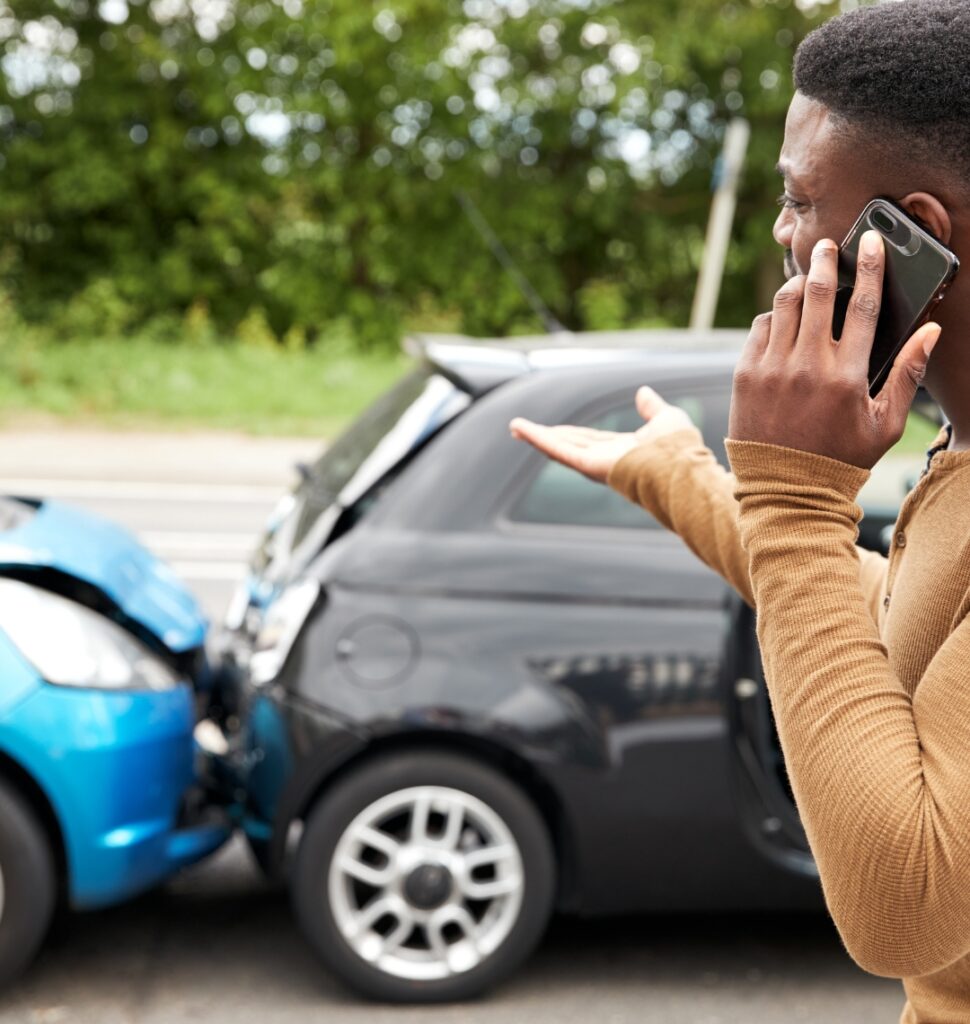
Injured in a ride share accident?

Ride Share Accident Lawyer & Uber/Lift Injury Attorney

600+

Success Stories

It’s free, If we don’t win.

A Ride-Share Accident introduces a layer of digital chaos to the physical trauma of a crash, complicating the path to recovery for victims in New York. The seamless convenience of tapping a screen for a ride often masks the violent reality of 4,000-pound machines navigating crowded streets.

The Physics: Steel vs. Flesh

The physics are unforgiving. A passenger in the back seat of a Toyota Camry often ignores their seatbelt. They trust the app. However, when that sedan strikes a pillar or is rear-ended by a truck, the passenger becomes a projectile. The air shifts violently inside the cabin. A pedestrian struck by a hurried driver feels the crushing weight of steel instantly. The vehicle always wins.

The Economic Context: The Gig Economy

These drivers form the backbone of the city’s transit network. The city never sleeps, and neither do the apps. Drivers rush to meet quotas. They stare at GPS screens rather than the road. This economic pressure creates a breeding ground for error. Speed equals money. Consequently, safety often takes a back seat to efficiency.

The Metaphor: The Digital Shield

Think of the ride-share company as a ghost. They exist in the cloud, while you bleed on the pavement. They use a “Digital Shield” to separate themselves from the driver’s actions. The driver is the face you see, but the corporation holds the power. A Ride-Share Accident is rarely just a car crash; it is a battle of David vs. Goliath’s algorithm.

Agents in a Ride-Share Accident

A Ride-Share Accident is not a monolithic event. The type of vehicle and the specific service tier dictate the legal landscape. We must dissect the specific agent involved to understand the risk profile.

The “Side Hustle” Sedan (Standard Tier) and Ride-Share Accident Risk

Most crashes involve the standard tier (e.g., UberX or Lyft Standard). These are everyday vehicles driven by non-professional drivers. They drive their personal Honda Civics or Toyota Corollas.

  • The Risk Profile: These drivers often lack commercial training. They may be fatigued from a primary job. Their vehicle maintenance relies on personal budgets, not fleet standards.
  • Who is Liable: The driver is the primary target. However, the app company provides supplemental insurance.
  • Key Evidence: The “Driver Profile” history is vital. We also need maintenance records for that specific personal car.

The High-Capacity SUV (XL/Black) in a Ride-Share Accident

This category involves larger, heavier vehicles like Suburbans or Escalades. These are often driven by individuals with more professional licensure, sometimes TLC (Taxi & Limousine Commission) plates.

  • The Risk Profile: The mass of these vehicles increases injury severity. A Ride-Share Accident involving a 6,000-pound SUV causes more destruction than a compact car crash.
  • Who is Liable: Liability may extend to a limousine company if the driver rents the vehicle.
  • Key Evidence: Commercial logbooks and TLC disciplinary records become essential here.

Food & Courier Delivery (Eats/Dash) Ride-Share Accident

We must not ignore the delivery sector. A Ride-Share Accident often involves a driver rushing hot food to a customer.

  • The Risk Profile: These drivers are under extreme time pressure. They constantly check their phones for updates. Distraction is the primary hazard.
  • Who is Liable: The platform’s insurance policy covers the active delivery phase.
  • Key Evidence: The timestamp of the “Order Acceptance” and “Drop-off.” This proves they were on the clock.

The “Pool” or Shared Ride Scenario

Shared rides add strangers to the mix.

  • The Risk Profile: Distraction increases with more people in the car. Stops are frequent and erratic.
  • Who is Liable: Liability can get messy if one passenger distracts the driver, causing the crash.
  • Key Evidence: Witness statements from other passengers are gold.

Location Types in a Ride-Share Accident

New York is not a uniform grid. A Ride-Share Accident in Manhattan differs vastly from one in Queens. The location defines the hazard.

Manhattan Congestion and the Ride-Share Accident

In Manhattan, space is tight.

  • The Conditions: Narrow lanes, aggressive taxis, and endless pedestrians create a pressure cooker.
  • The Specific Risk: “Dooring” is common here. A passenger opens a door into a cyclist. Sudden stops to pick up fares cause rear-end collisions.
  • Evidence: Surveillance cameras are everywhere. Storefront footage often captures the impact.

Outer Boroughs (Brooklyn/Queens) Ride-Share Accident Zones

The boroughs offer speed.

  • The Conditions: Wide avenues like Queens Boulevard or the Ocean Parkway invite speeding. The BQE and Belt Parkway are notorious for aggressive merging.
  • The Specific Risk: High-speed impacts. These crashes result in catastrophic structural damage and severe spinal injuries.
  • Evidence: Dashcam footage is crucial. Highway cameras may also record the traffic flow.

Airport Terminals (JFK/LGA) and Ride-Share Accident Danger

The airport pickup zone is chaotic.

  • The Conditions: Confused tourists, double-parked cars, and exhausted drivers circling the lot.
  • The Specific Risk: Low-speed crushing injuries. Pedestrians loading luggage are vulnerable to being pinned between bumpers.
  • Evidence: Airport security logs and rigorous camera coverage help reconstruct the scene.

Corporate Nuance: Liability in a Ride-Share Accident

The companies use a “Shell Game” to hide liability. They label drivers as Independent Contractors to avoid responsibility. However, the insurance status changes based on the “Phase” of the ride.

The “Period” System in a Ride-Share Accident

Understanding the “Period” or “Phase” is critical.

  • Period 0 (App Off): The driver is just a regular person. Only their personal insurance applies. The app pays nothing.
  • Period 1 (App On, Waiting): The driver is cruising for a fare. A Ride-Share Accident here triggers limited liability coverage. It is often low.
  • Period 2 (Match Accepted): The driver is en route to you. Coverage increases significantly.
  • Period 3 (Passenger in Car): The ride is active. This is when the “One Million Dollar” policy typically applies.
  • The Trap: Companies will argue the driver was in Period 1 instead of Period 2 to save money. We prove otherwise.

The Independent Contractor Defense

The apps claim they are merely technology platforms. They say they do not employ drivers.

  • The Reality: They control the rates, the route, and the rules.
  • The Rebuttal: Courts are increasingly scrutinizing this. If the app exercised enough control, we fight to hold the corporation liable for the Ride-Share Accident.

The Municipal Notice (Crucial Warning)

Sometimes, a ride-share vehicle collides with a city vehicle.

  • The Scenario: Your Uber hits a city bus or a sanitation truck.
  • The Rule: You have only 90 days to file a Notice of Claim against the city.
  • The Risk: If you miss this strict deadline, you lose the right to sue the city forever. The app insurance might not be enough.

Financial Translation: The Cost of a Ride-Share Accident

We must translate physical pain into financial terms. Insurance adjusters speak in dollars, not empathy. A Ride-Share Accident creates specific, costly injuries.

Whiplash and Soft Tissue Damage

  • The Injury: Cervical Strain / Whiplash.
  • What it Feels Like: A burning stiffness in the neck. Headaches that start at the base of the skull. You cannot turn your head to check blind spots.
  • The Cost: Physical therapy copays pile up. Missed work days add up.
  • Estimated Value: This varies, but chronic pain increases the settlement value significantly.

Knee and Ligament Tears

  • The Injury: Torn ACL or Meniscus (Dashboard Knee).
  • What it Feels Like: The knee buckles. Sharp, stabbing pain when walking. Swelling that refuses to go down.
  • The Cost: Surgical reconstruction is expensive. Rehab takes months.
  • Estimated Value: Surgery raises the “case value” tier instantly.

Traumatic Brain Injury (TBI)

  • The Injury: Concussion or Brain Bleed.
  • What it Feels Like: Fog. Light sensitivity. You forget simple words. Mood swings that scare your family.
  • The Cost: Neurologists, long-term care, and lost earning capacity.
  • Estimated Value: These are high-stakes claims requiring life-care plans.

Proving the Case: Evidence in a Ride-Share Accident

Evidence disappears in days. In a Ride-Share Accident, the evidence is digital. We must act fast to stop “Spoliation” (the destruction of evidence).

The “Black Box” and App Data

  • The Data: The app records speed, GPS location, and braking habits.
  • The Fight: Companies will not hand this over voluntarily. We must demand the “audit trail.”
  • Why it Matters: It proves if the driver was speeding or looking at the app at the moment of impact.

The Smartphone as Evidence

  • The Distraction: Was the driver texting? Watching a video?
  • The Log: We request phone records.
  • The Proof: If a text was sent at 4:02 PM and the crash was at 4:02 PM, the negligence is clear.

The Rating System

  • The History: Did the driver have a 2-star rating?
  • The Pattern: Did previous riders complain about “unsafe driving”?
  • The Liability: If the app kept a dangerous driver on the road, they are negligent.

Level the Playing Field

The app companies have algorithms, legal teams, and unlimited resources. They want to minimize your payout. You cannot fight a tech giant with a simple phone call. You need a partner who understands the code and the court.

We match their technology with ours. After a Ride-Share Accident, do not let them delete the truth. Let us log in and fight for you. If you’ve been injured in a ride-share accident in New York, start a free case evaluation to discover if Pain Injury Law can help your potential case.

3 Easy Steps

How Our Process Works

1
Start Your Claim

Answer a few simple questions to get started.

2
We Get to Work

We assign a customized care team consisting of a lawyer, paralegal, and case manager to your claim. 

3
Stay Informed

Check in at your convenience to see how your case is going. Message your care team and upload documents right from your phone or choose another way to reach out and receive updates.
Our Team

Our community is the driving force behind Pain Injury Law. For decades, our attorneys and affiliates have served as a lifeline to injured New Yorkers struggling to overcome the physical, financial, and emotional hardships that come with getting hurt. Meet the Client Care Team doing the actual work on your case. 

Explore More: Ride-Share Accident

It’s free,
If we don’t win.

All of the emails, paperwork, meetings, calls, court appearances… it’s all free unless we win your injury case.

It’s free,
If we don’t win.

All of the emails, paperwork, meetings, calls, court appearances… it’s all free unless we win your injury case.

Get Fast PainInjuryLaw Help

Please add your phone number so we can text you the best direct call-back number. Once you submit, we’ll send an SMS with the number you can call right away.

This website uses cookies

Because getting injured is hard, getting legal help doesn’t have to be. To provide a secure and customized experience, Pain Injury Law uses cookies and tracking technologies. By clicking “Allow All,” you affirmatively consent to our use of internal session-monitoring technologies for security purposes, as well as the sharing of your device identifiers, web traffic, and audio-visual video viewing history on our public pages with third-party advertising partners. By making a selection, you acknowledge you have read and agree to our Privacy Policy and Terms of Use.