



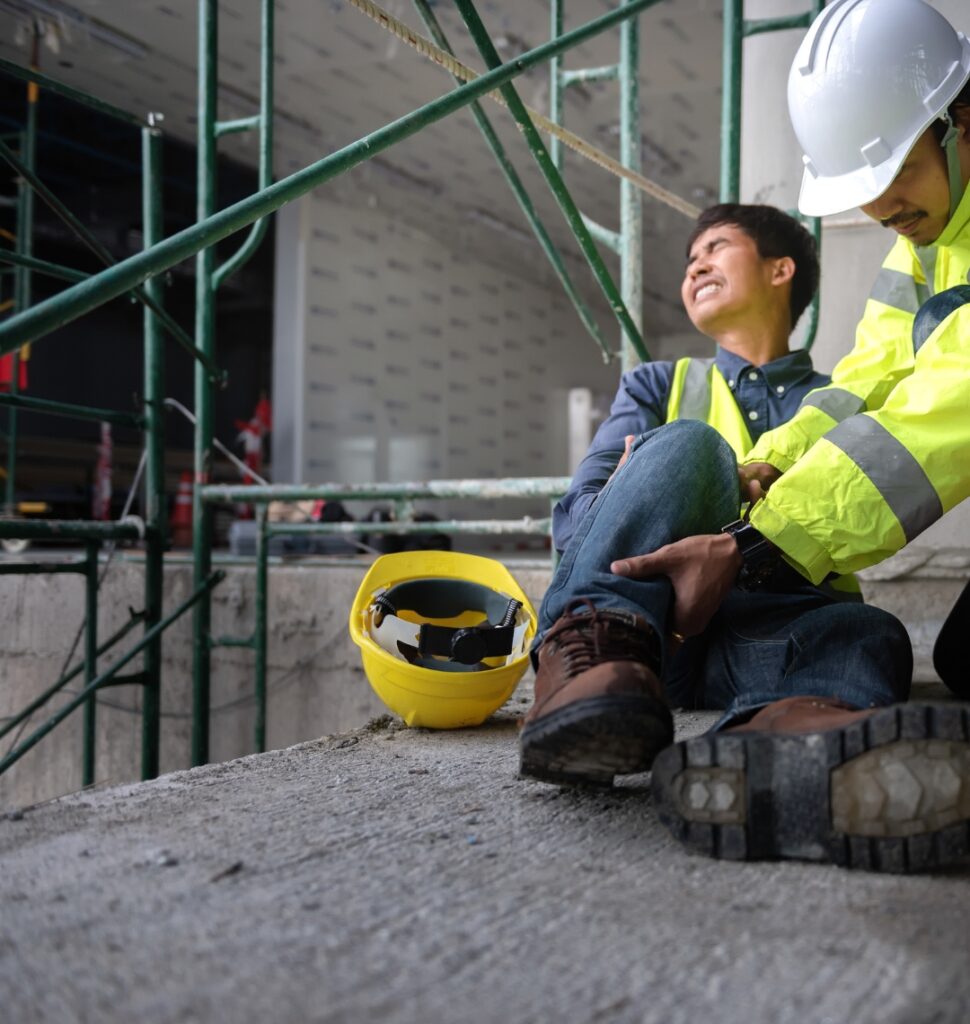
A section of roof parapet fell from a condominium building in Manhattan and slammed into a group of construction workers, injuring three and killing one. In the Bronx, a building under construction partially collapsed, killing one person and injuring five others. In Brooklyn, a construction worker was killed when he was crushed between two trucks. And in Midtown Manhattan, two window washers were seriously injured when skyscraper scaffolding gave way and they plunged 20 feet.
These types of accidents are not rare—and they are not isolated. They’re drawn from actual New York City Department of Buildings reports, and they happen nearly every day in New York City and across New York State.
Construction is one of the most dangerous jobs in the country and the world. But it can be especially dangerous in New York, where building booms, high-rise projects, relentless pressure to work fast, safety violations, a large population of vulnerable immigrant workers, and unique construction laws combine to create a threat landscape for construction accidents that, like many things New York, is a creature all its own.
Every year, hundreds of workers are injured and dozens are killed in New York construction accidents. It is not only workers who are at risk, either. Residents, pedestrians, and passersby can be struck by falling debris or injured by other worksite hazards as construction sites proliferate across the City, often in highly congested areas where the line between worker and bystander is separated by little more than temporary scaffolding and green netting.
Workers’ compensation provides injured construction workers with access to medical treatment and partial wage replacement. In addition, New York law provides special protections for injured construction workers, while pedestrians, residents, and others injured by construction activity may have the right to pursue negligence claims against responsible parties.
Construction injury claims can be complicated on sites where many laborers are working side by side for different companies and contractors. A construction accident lawyer can help sort through the noise, identify who’s to blame, and nail down every potential source of compensation.
New York City is constantly under construction. A city in constant flux and reinvention, it’s not wrong to think of it as the largest construction site in the world.
The busiest—and most dangerous—construction areas are Manhattan and Brooklyn, followed by Queens, the Bronx, and Staten Island, but it seems that no matter where you are, and where you look, there’s a “sidewalk shed” or “scaffolding forest.”
New Yorkers as well as visitors to the City are intimately familiar with the sights, sounds—and hazards—of construction sites. Men working at heights, shouting to each other in different languages to be heard over traffic and power tools. The electric whirr of compressors. The “thwap thwap” of nails being driven. Drills spinning. Hand tools banging and clanging and some sounds that can’t even be identified. It looks and sounds interesting—and also kind of dangerous. And that’s because it is dangerous.
Prior to the COVID-19 pandemic, which caused a delay in some construction projects, the City was experiencing one of the biggest building booms in its history. But even during a slowdown, New York City is a hotbed of construction due to its prime real estate and aging infrastructure.
At any given time in New York City, there are tens of thousands of active construction sites. In 2019, the New York City Department of Buildings said that one-quarter of these sites are not in compliance with safety regulations.
Fast-forward a few years, and the situation doesn’t show much improvement. There are more than 1 million buildings in New York City, and 40,000 of them are under construction. Only 500 inspectors are checking them all for safety. And inspection levels remain 15% below pre-pandemic numbers.
The Department of Buildings put out a report recently that found construction site injuries fell from 692 in 2023 to 482 in 2024. There were also seven construction site deaths in 2024—half the number compared to 2019. But four workers died in the first four months of 2025 alone.
The Bronx building collapse of 2023, linked to ongoing construction and façade repair work, was blamed on “sloppy mistakes” and led to the formation of a task force to proactively identify job sites that pose a risk to workers and future tenants. A near-miss “sloppy mistake” in Midtown in April 2025 saw two small cranes collapse onto scaffolding when a mini crane was used to lift up another mini crane.
Fortunately, nobody was hurt in the Manhattan incident. But many construction workers aren’t so fortunate when things go wrong on New York construction sites. According to a recent report from worker advocacy group NYCOSH:
Seventy-three percent of the construction fatality cases involved an employer with a co-occurring OSHA violation, such as a worker falling to their death on a site where the employer had been fined for failing to provide safety training and not implementing required fall protection, NYCOSH’s report shows.
Failure to comply with safety regulations is a direct threat to New York construction workers, making an already dangerous job even more risky.
Department of Buildings Commissioner Jimmy Oddo put it in a distinctly blunt New York way: “Construction work is one of the most, if not the most, dangerous jobs in New York City. Why is that?”
Answering his own question, Oddo went on to say: “Crappy owners find crappy contractors find crappy engineers.”
The DOB hopes to perform an additional 1,000 inspections over the course of the next year with its newly formed task force. But with tens of thousands of projects spread out over five boroughs, and the DOB facing a vacancy rate of 13% at the start of 2025 despite a construction boom, rooting out safety issues will be a task almost as tall as a NYC skyscraper.
The real number of construction accident injuries and deaths is likely much higher than reported.
Up until NYC passed Local Law 78 in 2017, the city only counted fatal construction accidents that involve a building code violation. Officially, that’s not supposed to happen anymore. Realistically, underreporting and counting of NYC construction accidents still goes on, especially in cases with Latino and other immigrant workers.
According to NYCOSH, immigrant construction workers are more vulnerable to employer exploitation and retaliation. Especially now, amid a nationwide crackdown on immigration and higher anti-immigrant sentiment, employers may take advantage of workers’ fears to sweep safety issues and accidents under the rug.
The DOB says that construction site inspections are up citywide. But workers continue to fall on the job, sometimes to their death.
Falls are, by far, the leading cause of New York construction injuries and deaths, accounting for nearly two-thirds. Other causes include falling materials, construction equipment, scaffold installations, and excavation work.
Unspecified incidents coded only as “other construction related” are the second-leading cause of NYC construction injuries and fatalities. Accident codes offer limited details: many are coded simply as “falls,” “struck by,” “caught in” or “caught between” objects, electrocution, and “other.”
But a closer look at DOB accident reports, now required by Local Law 78 for all construction accidents resulting in an injury or fatality, reveals what some of these “other” incidents look like—and how routine construction duties can easily become dangerous:
New York City construction site accidents such as these occur on a daily basis. But this is just a small part of the story.
Injured workers sometimes struggle to receive the full amount of workers’ compensation insurance benefits they’re entitled to. And when workers’ compensation is not enough to cover their medical bills, pain and suffering, and “other” losses, they may need to turn to the court system.
Workers’ compensation provides wage benefits and medical care to injured construction workers, regardless of how they were hurt or their immigration status.
There are limitations, though, to workers’ compensation. The maximum amount of benefits you can receive is capped at around $1,000/week. And even if you are permanently disabled from your construction accident injuries, there may be limits on your lifetime benefits.
If you’re hurt badly enough to not be able to return to work, a workers’ compensation claim may be insufficient to support you and your family long-term. Workers’ compensation also does not cover the pain and suffering that commonly accompany construction injuries.
A separate personal injury lawsuit might be possible when construction accidents are caused by negligence. Workers may be eligible for a lawsuit in the following circumstances:
New York labor law recognizes the risks that workers face on construction sites and gives them the right to take their injury claim beyond the workers’ compensation system. For example, Labor Law sections 240 and 241 impose absolute liability on the construction companies, property owners, and/or contractors that are responsible for maintaining a safe work environment. Typically, it does not matter whether the injured construction worker acted negligently.
The statute of limitations for filing a New York construction accident lawsuit is generally 3 years from when the accident occurred. That’s longer than the timeframe for initiating a workers’ compensation claim, but it’s not a limit you should push.
Filing sooner, rather than later, is recommended to preserve evidence and keep claims fresh. Construction accident evidence can disappear quicker than an expensive tool left out on a job site overnight. An employer or subcontractor who cut corners on safety is not likely to play by the rules when facing an injury claim. Waiting even a few months to initiate legal action can squander any time advantage you might have—and, fair or not, raise questions about why you waited.
Take the initiative and contact an injury lawyer soon after a construction accident to preserve your rights. It’s the safest move. Even if you don’t ultimately end up filing a construction accident lawsuit, a free consultation can let you know what your options are and the different filing deadlines that apply.
Like many aspects of our society, the risks of construction work are not distributed equally.
Worker advocacy groups such as NYCOSH have repeatedly documented a pattern: immigrant construction workers are more likely to be assigned the most hazardous tasks, less likely to receive proper safety training, and more likely to face retaliation when they speak up.
Language barriers, fear of job loss, and concerns about immigration status all contribute to a system where safety violations too often go unreported—and injuries go uncompensated.
Yes. Immigrant construction workers are eligible for workers’ compensation benefits in New York regardless of immigration status. Citizenship, visa status, or work authorization does not determine eligibility. If a worker is injured on the job and qualifies as an employee under New York law, workers’ compensation benefits apply.
Those benefits may include:
Immigration status also does not prevent an injured worker from filing a construction accident lawsuit when negligence or safety violations are involved. Immigrant workers may pursue:
It is illegal in New York for an employer to fire, threaten, or retaliate against a worker for reporting a safety violation or workplace injury—no matter their immigration status. Importantly, documented safety violations can later become critical evidence in construction accident lawsuits, particularly in Labor Law cases.
Despite these protections, many immigrant workers hesitate to report injuries or unsafe conditions out of fear. That fear is often exploited by bad actors in the construction industry. But it has no legal basis under New York law.
New York construction sites also rely heavily on non-resident workers: people who live outside New York State, commute from neighboring states, or travel to New York temporarily for major projects. Like immigrant workers, non-resident status does not strip a construction worker of legal protections when an injury happens on a New York job site.
For workers’ compensation purposes, the key factor is where the injury occurred and where the work was performed, not where the worker lives. If a non-resident construction worker is injured while working in New York, New York workers’ compensation law generally applies.
That means non-resident workers may still be entitled to the same workers’ compensation benefits as New Yorkers (i.e., medical treatment, wage replacement benefits, disability benefits, and death benefits for surviving family members). Living in New Jersey, Pennsylvania, Connecticut, or elsewhere does not eliminate these rights.
Non-resident workers are likewise not barred from filing construction accident lawsuits in New York. Depending on the facts, they may pursue:
Workers’ compensation may be the starting point, but it is not always the end of the compensation picture, particularly in serious injury or fatal construction accident cases.
Construction accident cases involving non-resident workers can raise additional issues, including:
These complications can make legal guidance especially important—and urgent. The more moving parts a case has, the longer it can take to sort through them.
Construction companies operating in New York cannot avoid responsibility by pointing to a worker’s immigration status or out-of-state residence. If the job site is in New York, New York safety laws apply—and injured workers, whether immigrant, non-resident, or native New Yorkers, may have enforceable legal rights. They just have to take action to preserve them.
New York City construction hazards don’t always remain within the work zone and aren’t always limited to construction workers. Falling debris from active job sites has seriously injured—and, in some cases, killed—pedestrians, tenants, and bystanders who had nothing to do with the construction project other than being in the wrong place at the wrong time.
In December 2019, a 60-year-old woman walking along a Midtown Manhattan sidewalk near Times Square was fatally struck by a piece of building façade that broke loose and fell from above. She was simply walking down one of the busiest streets in the city when the debris fell.
More recently, in December 2025, four pedestrians were injured on Park Avenue when bricks fell onto the sidewalk after a window-washing rig malfunctioned during building work. The victims were passing beneath scaffolding that was supposed to protect them.
These are not freak accidents in the “world’s largest construction site.” They are examples of a recurring danger in a city where construction constantly takes place directly above public sidewalks, building entrances, storefronts, and residential areas.
In virtually all cases where NY construction-related injuries have occurred to non-workers, the victims were doing nothing wrong. They were not trespassing. They were not ignoring warnings. It was pure bad luck in a city where construction is constant, unavoidable and very often public. Luckily for them, though, when safety measures fail and the consequences extend beyond the job site, New York law allows injured non-workers to hold the responsible parties accountable.
New York’s density makes falling construction debris especially dangerous. Job sites are often located:
In many cases, the only barrier between active construction and the public is temporary scaffolding, sidewalk sheds, or netting—systems that must be properly installed, inspected, and maintained to work as intended.
When they fail, non-workers can be caught completely off guard. Pedestrians, tenants, delivery workers, and residents have no protective equipment, no warning, and no control over job-site safety decisions.
Construction accidents involving falling objects frequently include:
These incidents often occur outside marked work zones, during off-hours, or in areas that appear open and safe to the public.
Unlike injured construction workers, non-workers are not covered by New York’s Labor Law protections. However, they may still have strong legal claims under New York negligence and premises-liability law.
Pedestrians, residents, and bystanders injured by falling construction debris may be able to pursue claims against:
Property owners and contractors have a legal duty to maintain construction sites and adjacent public areas in a reasonably safe condition. When falling debris injures someone outside the site, it can point to failures in inspection, supervision, maintenance, or compliance with safety regulations.
For people living in or next to buildings under construction, the danger can be continuous. Projects can last months or years, exposing residents to:
In these cases, injuries may involve both premises liability and construction-related negligence, depending on who controlled the work and who was responsible for safety.
When falling construction debris or construction equipment injures a pedestrian, tenant, or bystander, liability usually turns on who controlled the site and who was responsible for safety at the time of the accident. More than one party may be legally responsible.
Depending on the circumstances, liability may rest with:
In many cases, injuries to non-workers result from the same preventable failures that injure construction workers, such as poor inspection, improper installation of safety systems, unsecured materials, or ignored warnings about unsafe conditions.
These cases do not hinge on whether the injured person made a mistake, but on whether those in charge of the construction site failed to take reasonable steps to protect the public from known, foreseeable hazards.
Construction signals progress. It shows that work is being done to make an area newer, stronger, better-looking, and usually, thanks to material upgrades and more modern building techniques, safer.
The construction process itself, though, can be extremely unsafe, not only for workers, but for anyone close to a New York construction site. The DOB is on the record saying that every construction and injury fatality is preventable. That means somebody can be held accountable.
It’s not your job to find out what happened and why you got hurt during a construction accident. That’s our job. Reach out, and we’ll get to work right away building a case that stands up to scrutiny and is far stronger than the floppy netting that passes for a safety shield on NYC construction sites.
We can’t make construction sites quieter—or safer. But we can make the claims process as painless as possible. Let us know how you were hurt, and we’ll let you know how we can help.
Answer a few simple questions to get started.
We assign a customized care team consisting of a lawyer, paralegal, and case manager to your claim.
Check in at your convenience to see how your case is going. Message your care team and upload documents right from your phone or choose another way to reach out and receive updates.

Our community is the driving force behind Pain Injury Law. For decades, our attorneys and affiliates have served as a lifeline to injured New Yorkers struggling to overcome the physical, financial, and emotional hardships that come with getting hurt. Meet the Client Care Team doing the actual work on your case.
All of the emails, paperwork, meetings, calls, court appearances… it’s all free unless we win your injury case.
All of the emails, paperwork, meetings, calls, court appearances… it’s all free unless we win your injury case.
Because getting injured is hard, getting legal help doesn’t have to be. To provide a secure and customized experience, Pain Injury Law uses cookies and tracking technologies. By clicking “Allow All,” you affirmatively consent to our use of internal session-monitoring technologies for security purposes, as well as the sharing of your device identifiers, web traffic, and audio-visual video viewing history on our public pages with third-party advertising partners. By making a selection, you acknowledge you have read and agree to our Privacy Policy and Terms of Use.