



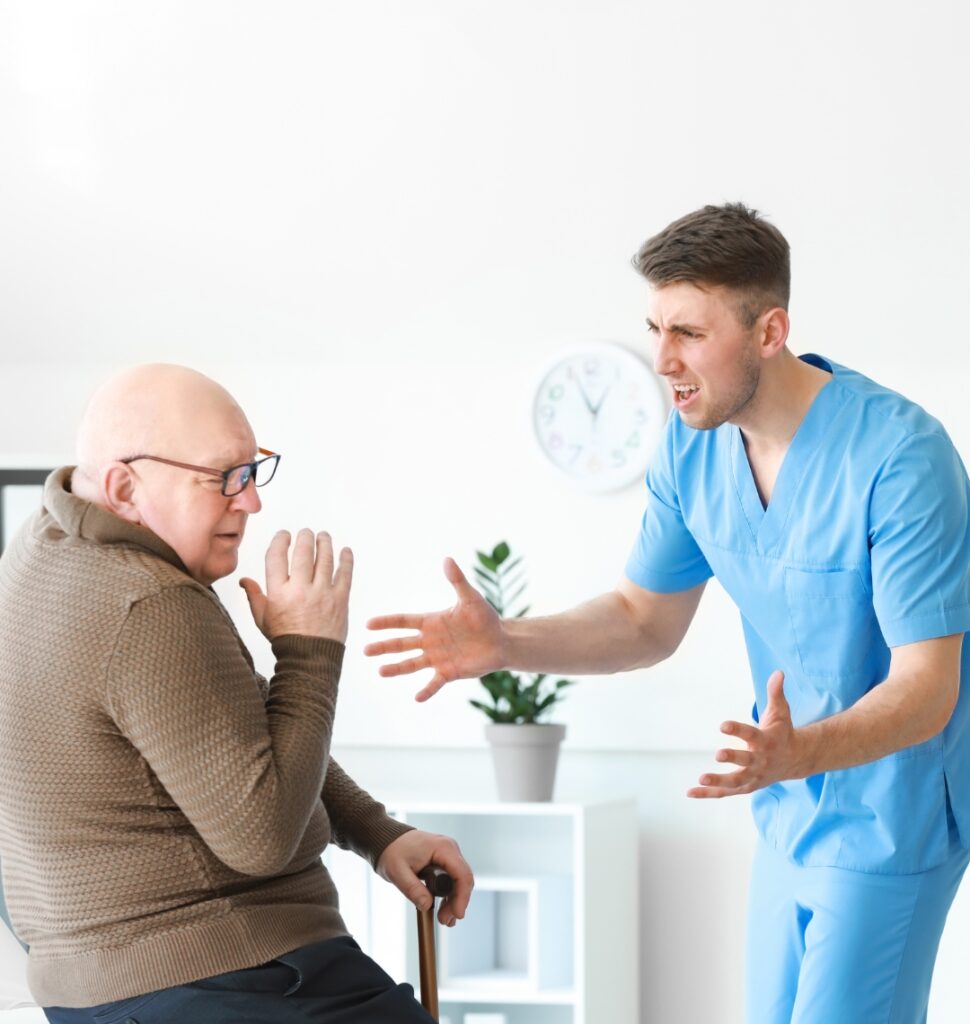
Nursing home negligence represents a profound betrayal of trust where vulnerability meets corporate indifference. This guide does not constitute legal advice, nor does it establish an attorney-client relationship; rather, it serves as an informational taxonomy of risk for families navigating this complex landscape.
The average nursing home resident is physically frail, often immobile, and frequently voiceless. Conversely, the facility is a well-funded institution designed for efficiency. This creates a drastic asymmetry. It is not just a medical issue; it is a structural one. The resident cannot fight back. The facility holds the keys, the food, and the medication.
The industry serves a vital economic role. It houses an aging population that the workforce cannot support at home. Yet, profit margins often dictate care levels. When a facility cuts staff to save money, the physical safety of the resident drops. The “power dynamic” here is absolute. The institution controls the environment. The resident must rely on that system for survival. If the system fails, the result is often catastrophic injury.
We cannot treat every nursing home case as identical. A fall in a hallway differs from a medication error in a private room. We must break down the specific agents of harm within the nursing home environment.
Large chains often prioritize occupancy rates over patient safety. The “agent” here is not a single nurse, but the corporate policy. These entities often slash budgets. This leads to understaffing.
This category involves clinical negligence. It occurs when licensed professionals fail to adhere to the standard of care. This is distinct from general neglect. It involves medical decision-making.
Residents with dementia require specialized oversight. The risk here is “elopement” (wandering off) or resident-on-resident aggression. The facility promises a secure environment. Failure to provide it is actionable.
Short-term residents often enter a nursing home for rehab after surgery. The goal is recovery. However, aggressive therapy or improper transfers can cause new injuries.
Location dictates the conditions inside a nursing home. A facility in Manhattan operates differently than one in a rural county. We must analyze the “personality” of the location.
These are often vertical structures. Space is tight. Residents may be on high floors. Elevators are chokepoints.
These areas host massive facilities. They are often industrial in scale. They sit near highways like the BQE or the Cross Bronx.
These facilities are more isolated. They may struggle to attract talent. Oversight agencies visit less frequently due to distance.
Defendants in nursing home cases are experts at hiding assets. They do not want you to find the money. They use complex legal structures to limit their payout.
A nursing home often splits itself into pieces. One company owns the building (the real estate). Another company holds the license (the operator). A third company provides the staff.
The doctor who made the mistake may not be an employee. The nursing home will claim he is an “independent contractor.” They will argue they are not responsible for his actions.
Some facilities are state or county-run. In New York, these might be part of the Health and Hospitals Corporation (HHC).
We must translate physical suffering into economic terms. This helps a jury or adjuster understand the value of the case.
Evidence in a nursing home disappears quickly. This is called spoliation.
Paper records can be rewritten. However, Electronic Health Records (EHR) are harder to fake.
Modern facilities have data everywhere.
The nursing home industry relies on silence. They count on families being too tired or too confused to fight back. But records do not lie. Electronic trails do not forget. We match their corporate complexity with forensic precision. It’s important to remember that nursing home abuse and neglect are not only illegal but also morally reprehensible. We can help you protect your loved one’s rights, hold the responsible parties accountable, and ensure that they receive the care and dignity they deserve. Start a free case evaluation to discover if Pain Injury Law can help your potential case.
Answer a few simple questions to get started.
We assign a customized care team consisting of a lawyer, paralegal, and case manager to your claim.
Check in at your convenience to see how your case is going. Message your care team and upload documents right from your phone or choose another way to reach out and receive updates.

Our community is the driving force behind Pain Injury Law. For decades, our attorneys and affiliates have served as a lifeline to injured New Yorkers struggling to overcome the physical, financial, and emotional hardships that come with getting hurt. Meet the Client Care Team doing the actual work on your case.
All of the emails, paperwork, meetings, calls, court appearances… it’s all free unless we win your injury case.
All of the emails, paperwork, meetings, calls, court appearances… it’s all free unless we win your injury case.
Because getting injured is hard, getting legal help doesn’t have to be. To provide a secure and customized experience, Pain Injury Law uses cookies and tracking technologies. By clicking “Allow All,” you affirmatively consent to our use of internal session-monitoring technologies for security purposes, as well as the sharing of your device identifiers, web traffic, and audio-visual video viewing history on our public pages with third-party advertising partners. By making a selection, you acknowledge you have read and agree to our Privacy Policy and Terms of Use.