



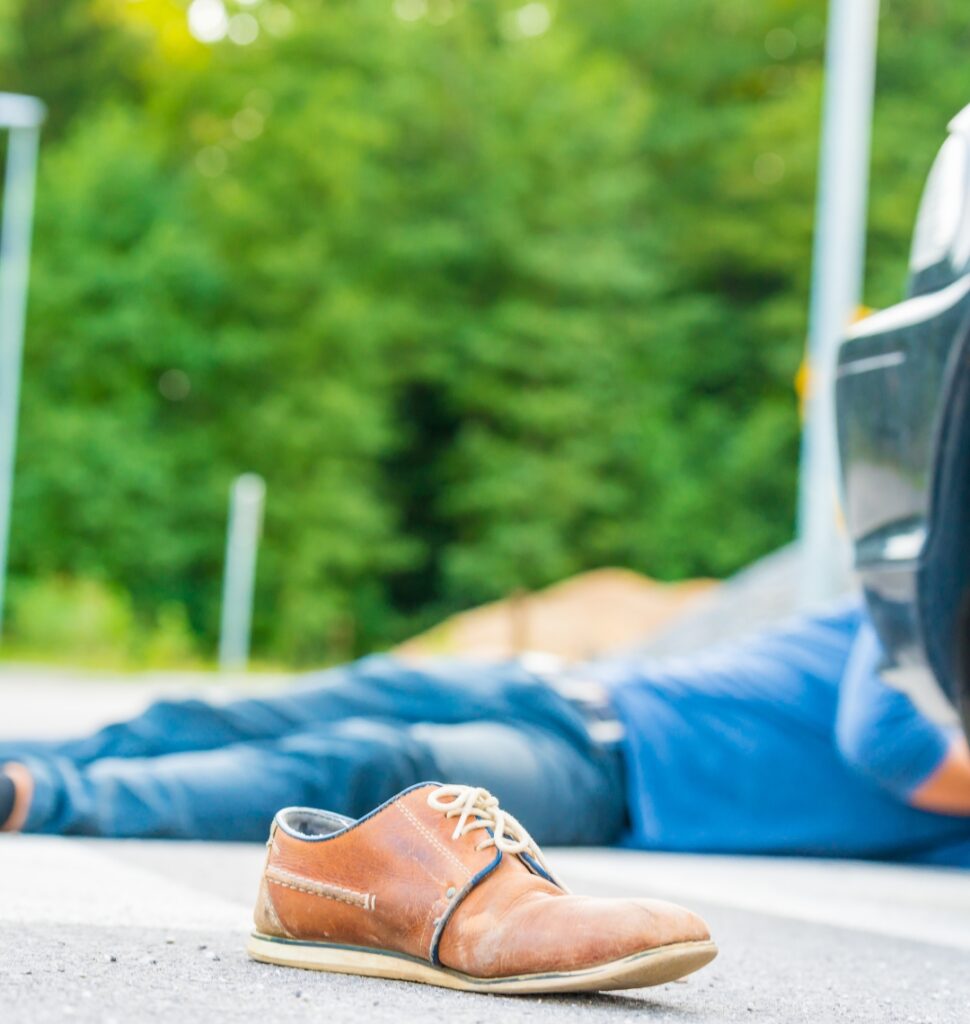
New York is consistently ranked as one of the most walkable cities in the country, thanks to its dense neighborhoods, extensive public transit, and unusually high percentage of car-free households. But “walkable” doesn’t always mean “safe.” Even within the City, walkability varies dramatically—Manhattan sits at the top of national walkability indexes, while Staten Island ranks closer to a car-dependent suburb than an urban core. And in recent years, pedestrian deaths and injuries have been trending in the wrong direction, despite major City investments aimed at making streets safer for people on foot.
Pedestrians are the most vulnerable street users. They have no airbags, no helmet, no protective frame—and in many cases, no warning that they’re about to collide with someone operating a multi-ton SUV, speeding through a turn on a Citi Bike, driving an MTA or DSNY vehicle, or, more commonly every year, riding an e-bike or e-scooter while commuting or rushing to complete a delivery. One moment you’re in the crosswalk with the walk signal; the next, your life changes.
New York encourages walking and continues to market itself as a pedestrian-first city through initiatives like Vision Zero, the “Walk to a Park” program, and the expansion of “Open Streets” to create pedestrian-priority corridors. But it’s no walk in the park if you get hit on foot in New York. If you were injured as a pedestrian, you should run—not walk—to get legal guidance and start building your path to recovery.
Americans say they want more walkable cities, and New York has responded in a big way.
The City has added thousands of Leading Pedestrian Intervals to make crosswalks safer, expanded its network of protected bike lanes, deployed speed cameras in every school zone, and redesigned dozens of dangerous intersections under Vision Zero. “Open Streets” now carves out pedestrian-priority corridors in all five boroughs, and as of July 2025, more than 80% of New Yorkers live within walking distance of a park as a result of open-space initiatives.
You have to try hard not to find a walkable NYC neighborhood, and you can spend your whole life there without a car. New York is large, but also approachable and intimate, due largely to the ability to enjoy the City on foot. Other parts of New York State, with their historic downtowns, revamped industrial areas, preserved urban cores, and picturesque small-town charm are walkable as well.
But there’s a world of difference between walking in Union Square, Chinatown, and the West Village versus Greenridge, Manor Heights, and Manhattan Beach. Parts of Rochester, Buffalo, and Albany are a joy on foot. Other parts, not so much.
Despite efforts to make more neighborhoods more pedestrian-friendly, the City as a whole, and the state overall, are moving in the wrong direction on pedestrian injuries and fatalities.
By some measures, 2025 saw New York regain its footing and reverse some of these worrying pedestrian crash trends. In the first six months of 2025, traffic deaths across the City plummeted 32% compared to the same period in 2024, an across-the-board drop that included pedestrian fatalities.
“Progress” is relative, though, especially when you consider the human toll. In 1990, more than 700 New Yorkers were killed by cars, half of them pedestrians. A hundred pedestrian deaths may feel like a small number by comparison. But every pedestrian accident “statistic” represents one life lost or changed forever.
The “Vision” for NYC and cities like Syracuse and Rochester might be zero traffic deaths and fatalities—the total elimination of what safety advocates like Transportation Alternatives have dubbed “traffic violence.” But the view from the ground may be far different if you’re on foot.
This is New York’s safety paradox: Even as cities become more walkable, real-world pedestrian risk is rising—fueled by forces that thoughtful street design alone cannot contain.
New York doesn’t just have “traffic.” It has layers of competing transportation systems—MTA buses, sanitation trucks, delivery vans, cargo e-bikes, mopeds, taxis, rideshare vehicles, private cars, and pedestrians all using the same curb lanes, intersections, and crosswalks. That complexity produces crash patterns that are distinctly New York.
Here are the pedestrian accident causes that matter most on New York streets:
Turning vehicles are one of the biggest, most persistent dangers for pedestrians in New York. At thousands of intersections, pedestrians and drivers move at the same time, with drivers looking first for a gap in traffic, not a person in the crosswalk. Bigger vehicles, along with vans and trucks, further reduce visibility, especially at night.
This is why the majority of serious pedestrian crashes investigated in the outer boroughs happen at intersections—not highways or mid-block.
MTA buses, school buses, DSNY trucks, DEP equipment trucks, and DOT pickup/utility vehicles all have large blind zones that can become even larger when turning from wide avenues into side streets. These vehicles also sit high off the ground, meaning even low-speed impacts can be catastrophic.
Pedestrians sometimes assume a bus driver or other driver sees them. Many bus and sanitation collisions show the opposite: the driver’s line of sight simply didn’t include the crosswalk or corner.
FedEx and UPS vans, Amazon DSP sprinters, moving trucks, and commercial box trucks frequently stop at or near intersections—even when they shouldn’t.
A parked truck can completely erase the sightline between a driver and a pedestrian. The result:
Scenarios like these are among the most common setups for severe crashes in Queens, Brooklyn, and the Bronx.
Micromobility has rewritten NYC street dynamics. Some experts have called electric bikes a “public health hazard.” New York in particular is facing a “perfect storm” of e-mobility risks. Cargo e-bikes, throttle e-bikes, mopeds, e-scooters, and app-based delivery riders move fast, weave between lanes, ride the wrong direction, and frequently enter crosswalks during the pedestrian phase.
Many pedestrian injuries now involve:
So-called “micromobility” crashes raise hard questions about insurance, because many riders are uninsured and many delivery platforms disavow responsibility.
Uber and Lyft drivers usually stop wherever passengers signal. That frequently means in bike lanes, bus lanes, crosswalks, or right at a curb extension, forcing pedestrians into traffic, hiding them from oncoming vehicles, and creating three-way conflicts between:
These pedestrian crash patterns are seen repeatedly in crash investigations near nightlife corridors, Midtown hotel districts, and outer-borough commercial strips.
Large housing developments—particularly NYCHA campuses in the Bronx, Harlem, East New York, and Red Hook—have intense pedestrian volumes but often sit along wide, multi-lane arterials with minimal traffic calming.
Common issues include:
These areas pose predictable pedestrian danger that commonly arises during school arrival/dismissal, shift changes, and at night.
“Dooring” collisions aren’t just a cyclist problem. Pedestrians walking close to parked cars in areas like Manhattan, Downtown Brooklyn, and LIC are sometimes pushed or knocked into live traffic when a passenger swings a door without checking.
A dooring injury can progress into:
“Dooring” is one of NYC’s most underrated pedestrian risks. You don’t have to be driving a car, or even in one, to effectively be involved in a car accident when doors are opened inattentively.
New York pedestrian crashes rarely involve just “a driver.” Like City traffic, liability is layered, depending on factors that include:
Here’s how pedestrian injury responsibility typically breaks down in New York:
Liable when they:
Insurance involved: New York auto liability coverage, plus potential access to supplemental UM/UIM benefits.
Commercial delivery vehicles create unique liability questions.
Liability can draw in:
Insurance involved: Commercial auto policies, oftentimes overlapping.
Uber/Lyft coverage depends on whether the driver is:
This affects whether the companies’ $1M liability policy applies or defaults to the driver’s personal auto insurance.
Rideshare crash patterns in NYC tend to involve:
Insurance involved: Rideshare platform liability coverage (up to $1M depending on trip phase), driver’s personal auto policy, potential UM/UIM coverage.
Crashes involving City vehicles are common and complex. For example:
Liability requires a Notice of Claim within 90 days and strict deadlines under the General Municipal Law.
Insurance involved: Municipal self-insurance or agency-specific coverage.
Construction vehicles can block visibility, narrow walkways, or reroute pedestrians unsafely. Liable parties may include:
Insurance involved: Commercial general liability, contractor auto policies, excess liability, sometimes City indemnification requirements.
When buildings:
…they can be liable under NYC administrative, property, and sidewalk-maintenance rules.
Insurance involved: Premises liability, umbrella policies, contractor coverage if construction contributed.
New York is a No-Fault state, which means injured pedestrians are typically covered for their medical bills and certain lost wages by the insurance policy of the vehicle that struck them—even if the pedestrian did nothing wrong.
You can be found partially at fault—jaywalking, crossing outside a crosswalk, or stepping into the roadway—and still get your medical bills covered. New York’s comparative negligence system allows injured pedestrians to recover compensation even when fault is shared; your compensation is simply reduced by your percentage of fault, not eliminated.
Here’s what pedestrians need to know about New York’s No-Fault coverage:
Under New York’s Personal Injury Protection (PIP) rules:
This applies even if the driver flees (hit-and-run cases may require the pedestrian’s own policy or MVAIC—see below).
Pedestrians may still have coverage through:
These claims are deadline-sensitive and require specific documentation.
No-Fault does not cover:
To recover these damages, the pedestrian must bring a liability claim against the driver, vehicle owner, employer (if applicable), or municipality (if a City vehicle was involved). Claims must meet “serious injury” thresholds.
When delivery vans, rideshare vehicles, city buses, trucks, or e-bikes are involved, determining whose PIP coverage applies can require immediate investigation. Delays can lead to a loss of benefits.
You typically must file a No-Fault application within 30 days of the crash. Pedestrians who are unaware of this deadline might miss it entirely.
It’s easy to assume that the injury claims process will play out simply and straightforward: someone hit you, the police came, the hospital treated you, and the facts will sort themselves out. You’ll be compensated for your injuries, one way or the other. You don’t have to “prove” anything.
But even with No-Fault insurance, crash evidence is needed to support a claim. And that evidence can disappear faster than a New York minute.
Here’s what most New Yorkers might not know about accident investigations and evidence preservation:
New York has a patchwork of cameras operated by:
Most of these systems overwrite footage within days, and some within 24–72 hours. If you don’t secure the video quickly, it’s gone.
FedEx, UPS, Amazon DSPs, and private courier fleets use:
But unless a preservation letter goes out immediately, these companies purge or overwrite logs as part of routine operations.
Rideshare companies track:
But they often deny or delay requests unless the inquiry is worded precisely and directed to the right department. A poorly drafted request can cost you critical digital evidence.
If the crash involved:
…you must file a Notice of Claim within 90 days, or you may lose the right to sue entirely. Meanwhile, municipal agencies do not preserve video or onboard data unless compelled by timely notice.
In a city where:
…the crash scene you return to one week later may not look like it did when you were struck.
The bottom line: Pedestrian crashes are chaotic, and New York’s data systems, no matter how sophisticated, weren’t built to preserve evidence for victims. If you don’t act quickly, key evidence disappears—and with it, your ability to prove what really happened.
When you think of New York, there are a few iconic images that come to mind. The Empire State Building. Times Square. The Brooklyn Bridge. A crowd of people crossing a busy intersection.
What do they all have in common? New York on foot. The rhythm of the City. The sounds, the smells, and the energy you only experience when you’re here and part of the scene. You might also rent a car or take the train to New York’s less-hyped upstate destinations to explore on foot.
But wherever your trip takes you, your daydream doesn’t include an e-scooter clipping you on the sidewalk. Or a distracted SUV rolling through a crosswalk. Or a Lyft passenger swinging a door open into your path. And it certainly doesn’t include the ensuing maze of claims, deadlines, and insurers.
The good news if you were injured as a pedestrian in New York? The solution is already in your pocket. It’s Pain Injury Law—a new, tech-driven way to handle injury claims.
Let us know how you were hurt, and we’ll let you know how we can help. It’s fast, easy, and free.
Answer a few simple questions to get started.
We assign a customized care team consisting of a lawyer, paralegal, and case manager to your claim.
Check in at your convenience to see how your case is going. Message your care team and upload documents right from your phone or choose another way to reach out and receive updates.

Our community is the driving force behind Pain Injury Law. For decades, our attorneys and affiliates have served as a lifeline to injured New Yorkers struggling to overcome the physical, financial, and emotional hardships that come with getting hurt. Meet the Client Care Team doing the actual work on your case.
All of the emails, paperwork, meetings, calls, court appearances… it’s all free unless we win your injury case.
All of the emails, paperwork, meetings, calls, court appearances… it’s all free unless we win your injury case.
Because getting injured is hard, getting legal help doesn’t have to be. To provide a secure and customized experience, Pain Injury Law uses cookies and tracking technologies. By clicking “Allow All,” you affirmatively consent to our use of internal session-monitoring technologies for security purposes, as well as the sharing of your device identifiers, web traffic, and audio-visual video viewing history on our public pages with third-party advertising partners. By making a selection, you acknowledge you have read and agree to our Privacy Policy and Terms of Use.